Introduction
Scholarships play a vital role in making higher education more accessible and affordable. They offer financial support to students who might otherwise struggle to cover the cost of tuition, books, and living expenses. Among the most common types of scholarships are need-based and merit-based awards.
Need-based scholarships are awarded primarily based on a student’s financial situation. These aim to support individuals from low-income backgrounds, ensuring that economic barriers do not prevent capable students from pursuing a college degree. In contrast, merit-based scholarships are granted based on academic, artistic, athletic, or other achievements, regardless of financial need.
Understanding the differences between need-based vs merit scholarship applications is essential for students making decisions about how to finance their education. It also informs families as they plan and support their children's academic journeys. For policymakers, recognizing these distinctions helps guide the development of equitable and effective financial aid programs.

📊 Scholarship Distribution Landscape
Prevalence and Allocation
In the United States, the distribution of scholarships varies widely among colleges and universities. Many colleges and universities prioritize need-based financial aid to ensure access for students from lower-income backgrounds (source). This approach aligns with efforts to promote educational equity by helping students who might otherwise be unable to afford higher education.
Merit-based scholarships, on the other hand, are often awarded to attract high-achieving students, regardless of their financial need. These awards are frequently used as recruitment tools to enhance the academic profile of incoming classes.
Public and private institutions play different roles in shaping these patterns. Public universities typically allocate a larger share of their aid budget toward need-based awards, especially due to state mandates and funding guidelines. Private institutions, while also offering need-based aid, may have more flexibility to use merit-based scholarships as a strategic tool to compete for top students.
Emerging Trends and Shifts
An emerging trend in the scholarship distribution landscape is a reassessment of the balance between need-based and merit-based awards. A growing number of institutions are reevaluating how much emphasis they place on academic merit versus financial need. This shift is influenced by increasing public pressure and advocacy for more equitable aid distribution practices.
As conversations around access and affordability intensify, schools are beginning to consider the broader impact of their scholarship policies. The debate over need-based vs merit scholarship applications continues to shape how resources are allocated and who ultimately benefits from them.

🌍 Equity, Inclusion, and Student Diversity
Impact on Socioeconomic Diversity
The choice between need-based vs merit scholarship applications significantly affects socioeconomic diversity on college campuses. Institutions that prioritize need-based aid tend to enroll students from a broader range of income levels, contributing to a more socioeconomically diverse student body Institutions focusing on need-based aid tend to have more socioeconomically diverse student bodies. In contrast, merit-based scholarships often go to students with access to better academic preparation, extracurricular opportunities, and test preparation—advantages more readily available to students from affluent backgrounds. This dynamic can unintentionally limit access for lower-income students, reducing overall socioeconomic diversity.
Racial and Ethnic Representation
There is a strong correlation between need-based scholarships and improved racial and ethnic representation in higher education. Because students from underrepresented minority backgrounds are disproportionately affected by economic barriers, need-based aid increases their access to college. On the other hand, merit-based scholarship models that overlook financial need may reinforce existing structural inequalities. These models can exclude capable students who lack the resources to meet traditional merit criteria, thus perpetuating racial and ethnic disparities in higher education.

Academic Impact and Student Outcomes
Performance and Retention
Merit-based scholarships reward academic excellence, which can serve as a strong motivator for students to sustain high academic performance. These scholarships often require recipients to maintain a specific GPA, encouraging consistent effort and focus. On the other hand, need-based scholarship applications target students with financial limitations, providing them with the support necessary to continue their education without the added burden of financial stress.
When comparing retention and graduation rates, students receiving need-based aid often exhibit comparable or even higher persistence rates than their merit-based counterparts. This may be attributed to the financial security that allows need-based recipients to prioritize education over part-time work or other obligations. Merit-based students, while academically strong, may face additional pressure to maintain their awards, potentially affecting long-term retention if performance standards are not met.
Psychological and Motivational Factors
Students awarded merit-based scholarships may experience heightened pressure to perform, leading to stress or anxiety about maintaining eligibility. This performance anxiety can impact their overall academic experience and mental health. In contrast, need-based scholarships offer financial relief without the same academic performance conditions, which can enhance student well-being and allow greater focus on learning outcomes.
The contrast between need-based vs merit scholarship applications also reflects differing motivational dynamics. While merit-based awards incentivize academic achievement, need-based aid nurtures academic persistence by alleviating external financial pressures. Both forms of aid play significant roles in shaping student outcomes, but their psychological and motivational impacts differ in meaningful ways.

Institutional Strategy and Financial Sustainability
Cost Analysis for Institutions
When evaluating need-based vs merit scholarship applications, institutions must consider the financial implications of each model. Need-based aid programs can be more costly for institutions, often requiring larger endowments or sustained federal and state support to meet students' financial needs Need-based aid programs can be more costly for institutions. These programs are essential for promoting access and equity but can strain resources without external funding.
In contrast, merit-based awards are frequently used as strategic tools to attract high-achieving students. By offering scholarships based on academic or extracurricular excellence, institutions aim to enhance their student profiles and boost national rankings. This approach can be more predictable in budgeting and may require less financial outlay per student compared to need-based aid.
Return on Investment (ROI)
The return on investment also varies significantly between need-based and merit scholarship applications. Merit-based scholarships can yield long-term institutional benefits through alumni success and increased prestige. Graduates who excel in their fields often contribute to the institution’s reputation and may become donors in the future.
On the other hand, need-based scholarships offer a different kind of ROI—social return. By supporting students from low-income backgrounds, institutions can foster upward mobility and generate positive community impact. These outcomes contribute to the broader mission of higher education and can enhance an institution’s public value and social credibility.

📜 Policy, Ethics, and Public Opinion
Legal and Policy Trends
In recent years, national and state-level legislation has increasingly focused on promoting equity in education funding. This shift has influenced how institutions approach need-based vs merit scholarship applications. For example, some states have introduced policies that require a greater share of public scholarship funds to be allocated based on financial need, in response to growing concerns about college affordability and access. Additionally, post-pandemic institutional policy changes have highlighted the economic disparities students face, prompting universities to reevaluate their scholarship criteria to ensure more inclusive access.
Ethical Considerations
The ethical debate around need-based vs merit scholarship applications often centers on balancing equity and excellence. While merit scholarships reward academic or extracurricular achievement, they may inadvertently favor students from higher-income backgrounds who have had greater access to resources. On the other hand, need-based scholarships aim to level the playing field but may raise concerns about maintaining academic standards. Transparency in scholarship criteria and selection processes is crucial to address these ethical challenges, helping to build trust and ensure fairness across all applicant groups.
Public Opinion and Media Influence
The media plays a significant role in shaping public narratives around fairness in scholarship distribution. Stories highlighting disparities in access to merit-based aid often spark public debate and influence perceptions of educational equity. Advocacy groups and think tanks also contribute by publishing research and policy recommendations that sway institutional policies toward more need-aware approaches. These forces together impact how colleges and policymakers address the balance between need-based vs merit scholarship applications.

Case Studies and Comparative Examples
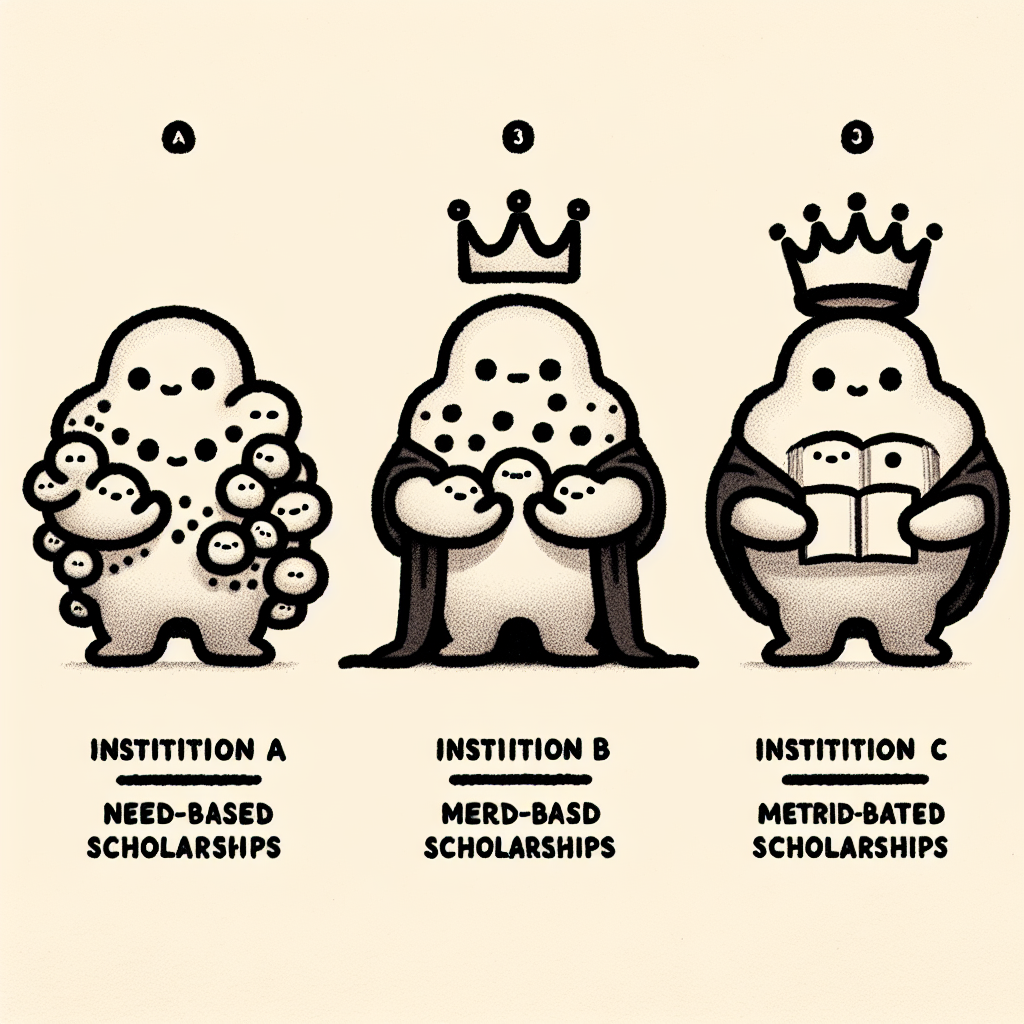
Institution A: Need-Based Focus
Institution A prioritizes need-based scholarship applications, aiming to support students from low-income backgrounds. This approach has led to increased enrollment among underrepresented groups, contributing to a more diverse student body. According to internal data, the proportion of first-generation college students rose by 25% over five years.
Student success at Institution A shows mixed results. Many recipients credit the scholarships with making higher education accessible, reducing their financial stress. However, some students report challenges balancing academic demands with part-time jobs, indicating that while tuition is covered, ancillary costs remain a burden.
Institution B: Merit-Based Focus
Institution B emphasizes merit-based scholarship applications, rewarding high academic performance and standardized test scores. This model has bolstered the institution’s academic reputation, attracting top-performing students and increasing its national rankings.
However, retention among financially insecure students is a concern. Some merit scholars who lack sufficient financial support struggle to remain enrolled, especially when unexpected expenses arise. This indicates that academic excellence alone may not ensure student persistence without adequate financial backing.
Institution C: Hybrid Model
Institution C employs a hybrid approach, combining need-based and merit-based scholarship applications. The institution uses a weighted formula that considers both academic achievement and demonstrated financial need. This balanced strategy aims to attract high-achieving students while ensuring access for those from disadvantaged backgrounds.
Outcomes at Institution C suggest the model is effective. The school reports steady growth in both academic performance metrics and socioeconomic diversity. Administrators note that the hybrid model reduces dropout rates and fosters a more inclusive campus environment. One key lesson learned is the importance of transparent criteria to ensure equitable allocation of aid.
🛠️ Best Practices for Applicants
Understanding Eligibility and Application Processes
When comparing need-based vs merit scholarship applications, it's essential to understand the distinct eligibility criteria and required documentation for each.
Need-based scholarships typically require financial documentation such as tax returns, FAFSA (Free Application for Federal Student Aid) results, and household income statements. These scholarships are awarded to students who demonstrate financial need, regardless of academic performance.
Merit-based scholarships, on the other hand, focus on academic achievements, leadership roles, extracurricular involvement, and other personal accomplishments. Applicants often need to submit transcripts, standardized test scores, and letters of recommendation.
To maximize your chances of success, tailor each application to its specific criteria. For need-based options, ensure all financial documents are accurate and submitted on time. For merit-based scholarships, highlight achievements and provide evidence of your qualifications through essays and references.
Strategic Application Planning
Understanding when to prioritize need-based vs merit scholarship applications depends on your individual financial situation and academic profile.
If you have strong academic credentials and a history of leadership or community service, merit-based scholarships should be a focus. However, if your financial circumstances are the primary barrier to higher education, need-based options could offer more substantial support.
Applicants should also consider combining both types of scholarships to offset college costs more effectively. Many institutions allow students to receive multiple awards, as long as total aid does not exceed the cost of attendance. Planning ahead and applying widely increases the likelihood of assembling comprehensive financial support across both need-based and merit-based opportunities.

Recommendations for Institutions and Policymakers
To improve the equity and effectiveness of financial aid, institutions and policymakers should address key areas in the administration of need-based vs merit scholarship applications.
Increase transparency in aid distribution
Clear communication about the criteria used for awarding scholarships is essential. Institutions should publish detailed guidelines explaining how need-based and merit scholarships are allocated, including the weight given to financial need versus academic or extracurricular performance. Transparent processes help build trust and ensure that students understand their eligibility and the steps required to apply.
Consider holistic scholarship models integrating both need and merit
Rather than treating need-based and merit scholarships as entirely separate categories, a more effective approach may involve hybrid models. These models assess both financial need and individual achievements, ensuring that high-performing students from low-income backgrounds are not overlooked. By combining criteria, institutions can support a broader range of students and promote both equity and excellence.
Invest in data collection and reporting to assess outcomes by scholarship type
Policymakers and educational institutions should collect longitudinal data to evaluate the long-term impacts of need-based vs merit scholarship applications. This includes tracking student retention, graduation rates, and post-graduation outcomes. Comprehensive reporting enables informed decision-making and helps identify which types of aid lead to the most effective educational and social outcomes.

Conclusion
When comparing need-based vs merit scholarship applications, it becomes clear that institutions must carefully consider how their scholarship policies reflect both their core values and broader societal goals. Need-based scholarships promote access and equity, helping to level the playing field for students from underrepresented or economically disadvantaged backgrounds. In contrast, merit scholarships often reward academic or extracurricular achievements, which can inadvertently favor applicants with greater access to resources.
Aligning scholarship strategies with institutional missions—whether focused on diversity, excellence, or community impact—ensures that financial aid supports long-term educational and societal objectives. Universities and scholarship providers should reevaluate their criteria and processes to create a more inclusive and effective system.
A shift toward a balanced approach that integrates both financial need and merit can lead to a more equitable scholarship ecosystem. By doing so, institutions not only support individual student success but also contribute to a more just and socially responsive education system.

📎 Additional Resources
When navigating need-based vs merit scholarship applications, it's essential to consult reliable sources for up-to-date information and data.
- National Center for Education Statistics (NCES) – Offers comprehensive data on financial aid trends, including how aid is distributed based on need and merit: https://nces.ed.gov/
- College Board Trends in Student Aid – Publishes annual reports analyzing national patterns in student aid, with insights into the balance of need-based vs merit scholarship applications.
- Financial Aid Offices – Each institution’s financial aid office typically provides detailed information on how scholarships are distributed, helping applicants understand the emphasis placed on need versus merit.

Citations
Many colleges and universities prioritize need-based financial aid, recognizing that financial barriers can prevent qualified students from accessing higher education. This emphasis helps ensure affordability for students from lower-income backgrounds.
Institutions focusing on need-based aid tend to have more socioeconomically diverse student bodies, indicating a broader commitment to accessibility and inclusion. These schools often see greater representation from underrepresented populations as a result.
Merit-based scholarships reward academic excellence, targeting students who have demonstrated high achievement in academics, leadership, or extracurricular activities. These awards are often used by institutions to attract top-performing students.
Need-based aid programs can be more costly for institutions, as they require allocating funds based on financial need rather than academic performance alone. Colleges must balance these costs with their goals for equity and student diversity.
 SHARE ON FACEBOOK
 SHARE ON TWITTER