Introduction
Staying productive is essential for students aiming to succeed academically while maintaining a healthy balance in their personal lives. With increasing demands from coursework, extracurriculars, and part-time jobs, student productivity tips can make a significant difference in achieving goals efficiently.
However, many students face common challenges that hinder productivity. These include poor time management, lack of motivation, digital distractions, and ineffective study environments. Mental health issues and burnout also contribute to decreased academic performance.
To address these issues, top universities have developed evidence-based strategies grounded in research and student feedback. For example, Stanford University emphasizes the importance of structured study schedules and active learning techniques, while Harvard University recommends breaking tasks into manageable segments and using tools like the Pomodoro Technique to maintain focus. The University of Oxford supports goal-setting and reflective learning as key components of sustained productivity.
By understanding these challenges and applying proven methods, students can improve focus, manage time better, and ultimately perform at their best.

🧠 Mindset & Goal Setting
Importance of a Productivity Mindset
A key factor in applying effective student productivity tips is adopting a growth mindset. Students with a growth mindset believe their abilities can improve with effort, which encourages persistence through challenges. In contrast, a fixed mindset assumes intelligence and talent are static, often leading to avoidance of difficult tasks.
Procrastination and perfectionism are common barriers to productivity. Students procrastinate when they fear failure or feel overwhelmed. Perfectionism can delay progress due to an unrealistic desire to meet flawless standards. Recognizing these patterns and shifting focus toward progress over perfection helps maintain momentum.
SMART Goal Setting
Setting SMART goals—Specific, Measurable, Achievable, Relevant, and Time-bound—helps students stay focused and organized. Instead of setting vague objectives like "study more," a SMART goal would be: "Study biology for 45 minutes every weekday at 4 PM." This clarity boosts accountability and progress tracking.
Aligning academic goals with daily routines ensures consistency. For example, if a student's goal is to improve their writing skills, scheduling 20 minutes of daily journal writing can support that objective. Integrating goals into everyday habits reinforces productivity.
Motivation & Accountability
Understanding motivation types is crucial for applying student productivity tips. Intrinsic motivation comes from within—such as curiosity or personal satisfaction—while extrinsic motivation is driven by external rewards like grades or praise. Intrinsic motivation tends to support long-term engagement, but both types can be useful.
Accountability partners or mentors can improve follow-through on goals. Sharing progress with a peer or advisor encourages consistency and provides support. Regular check-ins, whether weekly meetings or simple status updates, help maintain focus and commitment.

📅 Time Management Strategies
Effective time management is essential for students aiming to improve focus and meet academic goals. The following student productivity tips focus on establishing routines, prioritizing tasks, and realistically planning your schedule.
Weekly & Daily Planning
Maintaining consistent routines helps reduce decision fatigue and increases overall efficiency. By planning weekly and daily schedules, students can balance academic responsibilities with personal time.
One useful approach is creating a weekly template that outlines fixed commitments such as classes, study blocks, and extracurricular activities. Stanford University recommends using such templates to identify available time slots for studying and rest (Stanford University).
Digital tools like Google Calendar, Trello, and Notion can support this process. Google Calendar allows for visual time blocking, Trello helps manage tasks with boards and lists, and Notion integrates note-taking with scheduling.
To-Do Lists & Prioritization
A well-organized to-do list is central to managing time effectively. Students can prioritize tasks using the Eisenhower Matrix, which categorizes actions into four types: urgent and important, important but not urgent, urgent but not important, and neither urgent nor important. This method helps focus on meaningful work rather than just urgent tasks.
It’s also important to build flexibility into your schedule. Planning buffers for unexpected events can prevent stress and allow for adjustments. The University of Central Florida recommends maintaining a daily task list to stay organized and accountable (University of Central Florida).
Time Blocking
Time blocking involves dividing the day into segments dedicated to specific task categories, such as reading, writing, or reviewing. This technique helps minimize distractions and increases focus.
Avoid multitasking during these blocks. Switching between tasks reduces efficiency and can lead to cognitive overload. Staying focused on one category at a time supports deeper learning and better retention.
Realistic Time Planning
Accurately estimating how long tasks will take is a key student productivity tip. Tracking how much time similar assignments have taken in the past can improve future estimates.
Equally important is avoiding overcommitment. The University of Washington advises students to be realistic about their workload and to leave time for rest to prevent burnout (University of Washington).
By applying these time management strategies, students can make more effective use of their time and reduce academic stress.

⏲️ Focus & Attention Techniques
Creating a Distraction-Free Environment
Eliminating distractions is foundational to improving focus and attention. Students can enhance concentration by minimizing both digital and physical interruptions. This includes silencing notifications, using website blockers during study sessions, and keeping phones out of reach. According to the University of Arizona, even small changes like turning off non-essential alerts or clearing clutter from a desk can make a significant difference in maintaining focus.
Creating a dedicated, organized workspace also contributes to better study habits. The University of Cincinnati recommends setting up an area that is quiet, well-lit, and free from distractions, which helps train the brain to associate that space with productive work.
The Pomodoro Technique
The Pomodoro Technique is a time management strategy that boosts productivity by dividing work into 25-minute intervals, known as “Pomodoros,” followed by short breaks. As described by Stanford University, these sprints help maintain high levels of focus while preventing mental fatigue.
To implement the Pomodoro Technique:
- Choose a task to work on.
- Set a timer for 25 minutes.
- Work on the task until the timer rings.
- Take a 5-minute break.
- Repeat the cycle four times, then take a longer break of 15–30 minutes.
Students can use apps and timers such as Focus Booster, Pomofocus, or TomatoTimer to keep track of their intervals and breaks. These tools help reinforce consistency and structure in study routines.
Mindful Breaks & Digital Detox
Taking regular, intentional breaks is essential to sustaining productivity. Research shows that short pauses between study sessions help the brain consolidate information and reduce cognitive overload. Planned breaks, such as stretching, walking, or meditating, allow the mind to reset and return to tasks with renewed focus.
Incorporating digital detox practices—such as stepping away from screens during breaks—can further prevent burnout. Limiting exposure to social media and digital distractions during downtime helps maintain mental clarity and improves the quality of rest between work intervals. These mindful habits support long-term student productivity by promoting a balanced approach to focus and attention.

Collaborative Learning
Benefits of Study Groups
One of the most effective student productivity tips is participating in study groups. Collaborative learning can significantly enhance motivation and accountability. According to Stanford University, working with peers creates a sense of shared responsibility that helps students stay on track and engaged. In addition, discussing material with others often brings new perspectives and helps clarify difficult concepts, making it easier to retain and understand information.
Forming Effective Study Groups
To maximize the benefits of collaborative learning, it's important to form effective study groups. Start by selecting a mix of students who are committed, focused, and bring different strengths to the group. Set clear expectations and goals at the outset, such as meeting frequency, topics to cover, and individual responsibilities. Structure sessions to stay productive by creating agendas, assigning roles, and keeping discussions on-topic.
Online Collaboration Tools
For remote or hybrid studying, leveraging online collaboration tools is a valuable student productivity tip. Platforms like Google Docs allow real-time document editing, Zoom facilitates virtual meetings, and Slack provides organized communication channels. Scheduling regular virtual or hybrid meetings ensures consistent collaboration and keeps everyone aligned on group objectives.

🛠️ Tools & Resources for Productivity
A key aspect of improving academic performance is using the right tools and support systems. The following student productivity tips focus on digital and physical tools, as well as institutional resources that can help students stay organized and on track.
Digital Tools
Digital apps can streamline task management and reduce distractions. Notion offers customizable templates for organizing coursework, notes, and schedules. Todoist helps students manage daily to-do lists with priority tagging and recurring tasks. Trello is useful for visualizing projects and breaking them down into manageable steps using boards and cards. The Forest app promotes focus by discouraging phone use—planting a virtual tree that grows only when the user stays off their phone. Google Calendar allows students to plan their day, set reminders, and share schedules with others, making it easier to balance academic and personal responsibilities.
Physical Tools
Traditional physical tools still play a vital role in boosting productivity. Planners enable students to jot down deadlines and track progress over time. Whiteboards offer a visual space for brainstorming, planning essays, or mapping study goals. Index cards are effective for active recall and spaced repetition, especially in subjects that require memorization. Tools like noise-cancelling headphones help minimize distractions in noisy environments, while study timers—such as those used in the Pomodoro Technique—encourage focused work intervals followed by short breaks.
Institutional Support
Schools and universities often offer built-in support systems that directly contribute to student productivity. Academic advising services can help students select appropriate courses and create effective study plans. Tutoring centers provide subject-specific help, often free of charge, which can reinforce classroom learning. Additionally, mental health and wellness resources—such as counseling services and stress management workshops—support students' overall well-being, which is essential for maintaining consistent productivity.
These tools and resources, both personal and institutional, form the foundation of effective student productivity tips, enabling learners to manage their time, reduce stress, and achieve their goals.

🧩 Building Sustainable Habits
Building sustainable habits is essential for long-term success, especially when applying student productivity tips. Developing routines that stick requires understanding how habits form, tracking progress, and making adjustments over time.
Habit Formation Basics
At the core of habit formation is the cue-routine-reward loop. A cue triggers a routine, which then leads to a reward that reinforces the behavior. For example, a student might use finishing breakfast as a cue to start a 25-minute study session, with the reward being a short break or a small treat. Recognizing and intentionally designing these loops helps build habits that support productivity.
Starting small is key. Instead of trying to overhaul an entire schedule at once, students should focus on one or two manageable changes. For example, committing to reviewing notes for just five minutes a day can be the foundation for a larger study habit. Once the routine becomes consistent, it can be scaled up gradually.
Tracking Your Progress
Tracking habits helps maintain momentum and identify patterns. Students can use journals, spreadsheets, or habit-tracking apps to record daily behaviors and reflect on their consistency. Visual progress—like checking off completed tasks—can serve as a motivational reward in itself.
Reflection is equally important. At the end of each week, students should take a few minutes to assess what strategies are helping and which ones are falling short. This ongoing evaluation is a core component of effective student productivity tips.
Adapting Over Time
As the academic year progresses, schedules and responsibilities change. What worked in one semester may not suit the next. That’s why it’s important to reevaluate strategies regularly—ideally at the start or end of each semester.
Students should consider changes in course load, extracurricular activities, or personal commitments when adjusting their habits. Staying flexible and responsive to new demands ensures that productivity strategies remain effective and aligned with current goals.

Conclusion
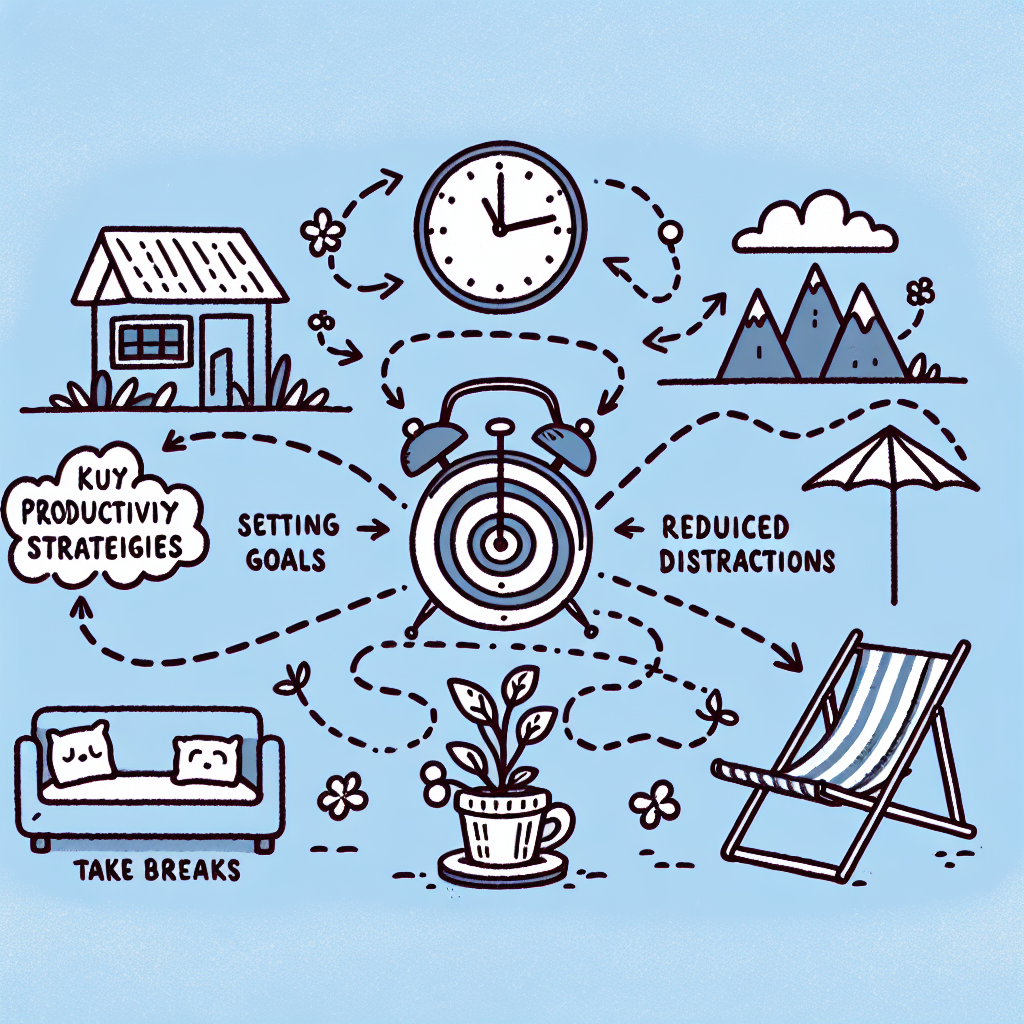
Improving your academic performance starts with applying effective student productivity tips. Throughout this article, we've explored essential strategies like setting clear goals, managing time with planning tools, reducing distractions, and taking regular breaks to maintain focus. Each of these methods can contribute to more efficient and effective study sessions.
Remember, no single approach works for everyone. The most successful students often experiment with different productivity techniques to find what suits their learning style and schedule best. Don't hesitate to adjust and refine your methods over time.
Ultimately, the goal of using student productivity tips is to work smarter, not harder. By being intentional with your time and energy, you can achieve better results without overwhelming yourself.
📚 References
- Stanford University's Center for Teaching and Learning: Improving Productivity — Offers research-based strategies and tools aimed at enhancing student productivity tips through better study habits and time management techniques.
- University of Arizona's Student Success: Focus — Provides advice on maintaining focus and concentration, key components of effective student productivity tips.
- University of Central Florida Online: Time Management for Online Students — Shares important student productivity tips specifically for online learners, including scheduling and prioritization strategies.
- University of Washington's Student Well-Being: Tips for Academic Success — Highlights the connection between mental health and academic performance, reinforcing holistic student productivity tips.
- University of Cincinnati Online: Student Success Skills — Focuses on developing essential skills like time management and goal-setting to improve student productivity tips.

 SHARE ON FACEBOOK
 SHARE ON TWITTER