Purpose of This Guide
The college admissions timeline can be overwhelming for students and families. This guide is designed to simplify the process by offering a clear, organized path through each stage of high school leading up to college application deadlines.
Our goal is to help students and their families navigate the complex college admissions process with confidence. By presenting a holistic timeline, we incorporate key academic checkpoints, extracurricular development, and critical application milestones. This ensures students stay on track and make informed decisions at every step.
Additionally, the guide integrates trusted advice from leading educational institutions, such as the College Board and the National Association for College Admission Counseling (NACAC), to provide accurate and up-to-date information. The result is a reliable resource that supports informed planning throughout the entire college admissions timeline.

📅 Overview: College Admissions Timeline at a Glance
Understanding the college admissions timeline is essential for students and families preparing for higher education. Breaking it down by grade level helps ensure students stay on track and make the most of each academic year.
9th Grade: Academic Foundation and Extracurricular Exploration
In 9th grade, students should focus on building a strong academic base and exploring a variety of extracurricular activities. This is the time to develop good study habits and begin identifying interests that could shape future college applications.
10th Grade: Skill-Building and Resume Development
By 10th grade, students can start refining their academic and extracurricular interests. They should begin building a resume that reflects consistent involvement and growing leadership roles. It’s also a good time to explore potential careers and related college majors.
11th Grade: College Research, Standardized Testing, and Planning
11th grade is a pivotal year in the college admissions timeline. Students should research colleges, attend information sessions, and take standardized tests like the SAT or ACT. Planning for senior year, including coursework and application strategy, becomes important during this time.
Summer Before 12th Grade: Campus Visits, Essay Drafting, and Recommendation Prep
The summer before senior year is ideal for college campus visits, writing initial drafts of application essays, and identifying teachers for letters of recommendation. Using this time wisely can ease the workload during a busy senior year.
12th Grade: Final Applications, Financial Aid, and Admissions Follow-Up
In 12th grade, students complete and submit college applications, apply for financial aid, and monitor application portals for updates. This phase includes managing deadlines, submitting documents, and responding to any follow-up requests from colleges.
Staying aligned with the college admissions timeline helps students confidently navigate each step of the process.

9th Grade: Laying the Groundwork
Ninth grade marks the beginning of the college admissions timeline, and it’s an ideal time for students to build a solid academic and extracurricular foundation.
Academic Focus
Students should aim to select a course load that is both challenging and appropriate for their skill level. Taking honors or advanced courses where possible can demonstrate academic initiative, but it’s equally important to maintain strong grades. Developing effective study habits and organizational skills early on will help sustain academic success throughout high school.
Extracurricular Exploration
Exploring a variety of extracurricular activities allows students to discover new interests and begin identifying long-term passions. Whether through school clubs, community service, sports, or the arts, 9th grade is a time to try different things and find what resonates. This exploration can later shape a more focused and meaningful involvement in specific areas.
Long-Term Planning
Beginning a portfolio or resume of activities and accomplishments in 9th grade helps track progress and achievements over time. Students can also attend informational workshops or seminars to start understanding the college admissions timeline and what colleges look for. Resources like Suffolk University's College Planning Timeline offer helpful strategies specific to 9th-grade planning.
Starting early enables students to make informed decisions and build a strong profile throughout their high school years.

10th Grade: Building a Strong Profile
Academic Enrichment
In 10th grade, students should continue to challenge themselves academically by enrolling in rigorous coursework, such as honors or Advanced Placement (AP) classes if available. Maintaining strong grades in these challenging courses plays a key role in the college admissions timeline. It’s also a critical time to meet with school counselors to discuss long-term academic goals and begin mapping out a plan for the remaining high school years.
Continued Extracurricular Engagement
Sophomores should deepen their involvement in extracurricular activities by seeking leadership roles or increased responsibility in clubs, sports, or volunteer organizations. As interests begin to take shape, it’s helpful to start narrowing down focus areas. This focus not only strengthens the student’s profile but also aligns with the holistic approach many colleges take during the admissions process.
Early College Awareness
Students are encouraged to attend local college fairs or virtual information sessions to begin exploring different types of institutions and programs. Starting a preliminary list of colleges that align with personal and academic interests helps students stay organized and focused as they move forward in the college admissions timeline.
➡️ Also highlighted in Suffolk University's College Planning Timeline

11th Grade: The Launchpad Year
Fall
The college admissions timeline becomes more focused in 11th grade. In the fall, students should begin serious college research. Tools like Naviance, College Board’s BigFuture, and other school-provided platforms can help identify potential colleges based on interests, academic fit, and location. Attending college representative visits at your high school is another practical step to gather firsthand information about different institutions.
Taking the PSAT/NMSQT in the fall is also essential. High scores on this exam can qualify students for the National Merit Scholarship Program, a distinction that can enhance college applications.
Winter
During winter, students should start drafting their college list, dividing it into reach, match, and safety schools. This categorization helps balance ambition and practicality on the college admissions timeline.
It’s also time to register for the SAT or ACT and begin preparing with test prep resources. These standardized tests are a crucial part of most college applications. At the same time, students should continue their commitment to extracurricular activities, as sustained involvement demonstrates depth and leadership.
Spring
In the spring, students should take their scheduled SAT or ACT exams. This is also the ideal time to request letters of recommendation from teachers. Giving teachers ample notice ensures they have time to write thoughtful and personalized letters.
Additionally, students should begin brainstorming ideas for their personal statement or college essays. Starting early allows time for reflection and multiple drafts, leading to stronger, more polished writing.
➡️ This section follows guidance from the University of Michigan's Suggested Timeline and Rhodes College Planning Timeline.

Summer Before Senior Year: Prep Season
The summer before senior year is a key phase in the college admissions timeline, offering students the chance to get ahead before the busy fall semester.
Campus Exploration
This is an ideal time to visit prospective colleges, either in-person or through virtual tours. Touring campuses allows students to experience the environment, ask questions, and picture themselves as part of the community. Take detailed notes during each visit to help clarify preferences and refine your college list accordingly.
Essay Writing
Start drafting your personal statement and any required supplemental essays over the summer. Writing during this period allows for multiple rounds of revision. Seek feedback from teachers, school counselors, or trusted mentors to ensure your essays reflect your voice and experiences effectively.
Recommendation Letters
Decide who you’ll ask to write your recommendation letters. Once confirmed, provide them with helpful materials like your resume and a summary of your academic and extracurricular accomplishments. Doing this early ensures your recommenders have ample time to write thoughtful and personalized letters.
These steps are emphasized in the University of Cincinnati's College Application Checklist, which highlights the importance of preparing during the summer months to stay on track with the college admissions timeline.

12th Grade: Application Execution
Fall (August–October)
The fall of senior year is a critical phase in the college admissions timeline. Begin by finalizing your college list, categorizing schools into early decision, early action, and regular decision. Be realistic about your choices, balancing reach, match, and safety schools.
Once your list is solidified, focus on completing applications. Pay attention to early deadlines, which often occur in November. Submit all required materials—this includes online applications, official transcripts, and standardized test scores. Essays should be polished and finalized before submission.
In parallel, take care of financial planning. Complete the FAFSA as soon as it opens in October, and, if applicable, the CSS Profile. Begin searching for scholarships and apply to those that align with your qualifications and interests.
➡️ Informed by University of Michigan's Suggested Timeline and University of Cincinnati's Checklist
Winter (November–January)
As the college admissions timeline progresses into winter, continue submitting applications for regular decision deadlines. After submission, verify that all components—transcripts, recommendations, and test scores—have been received by each college. Some schools may request mid-year grade reports, so be prepared to submit them as needed.
Spring (February–May)
Spring marks the final stretch in the college admissions timeline. Review all admission decisions and financial aid offers carefully. Compare financial aid packages to understand the true cost of attendance. Make your final college decision by the national deadline of May 1. Once you've committed, notify other colleges of your decision to decline their offers. Begin preparing for orientation, housing selection, and class registration.
➡️ Supported by Rhodes College Planning Timeline
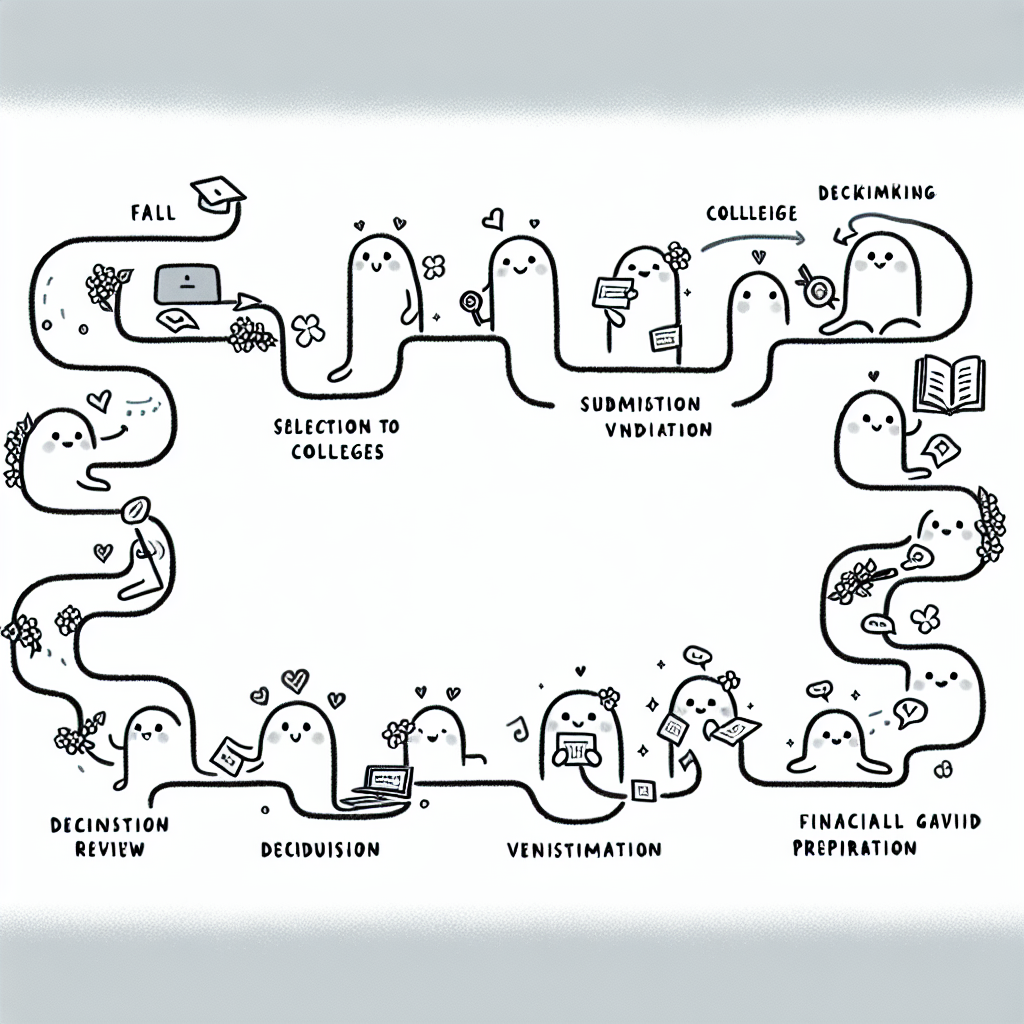
🗂️ Bonus: Planning Ahead by Grade 7–8
Starting early in the college admissions timeline can help students build a strong foundation for future success. While college may feel far off in middle school, grades 7–8 are a great time to begin forming habits and exploring interests that will support long-term academic and personal growth.
One key area of focus during these years should be developing strong time management and study skills. Learning how to balance homework, extracurriculars, and free time sets the stage for managing the more demanding schedules of high school and beyond.
Middle school is also an ideal time for students to explore their interests. Participating in summer enrichment programs, academic camps, or community activities can help students discover passions and talents. These experiences can later inform their high school course selections and extracurricular involvement.
Finally, it's helpful for families to begin talking about college goals during this stage. While specific plans are not necessary yet, open conversations about aspirations, values, and potential paths can provide clarity and motivation. Early dialogue can make the college admissions timeline feel less overwhelming later on.
This approach is consistent with guidance from Stanford University's Planning by Year, which emphasizes the value of early exploration and preparation.

🛠️ Tools & Resources
Navigating the college admissions timeline requires using the right tools and resources to stay organized and informed. Here are some key platforms and services that can help streamline the process:
- College Board: This official site offers SAT registration, score reporting, and a comprehensive college search tool. It also provides access to the CSS Profile, used by many private colleges to determine financial aid eligibility.
- ACT.org: If you're taking the ACT instead of the SAT, this is your go-to resource for test dates, registration, and prep materials.
- Common App and Coalition App: These platforms allow students to apply to multiple colleges using a single application. They also offer tools to track deadlines, manage recommendations, and organize essays—keeping your college admissions timeline on track.
- Naviance or Scoir: Many high schools provide access to one of these college and career readiness platforms. They help students research schools, request transcripts, and monitor application progress.
- FAFSA: The Free Application for Federal Student Aid is essential for accessing federal grants, loans, and work-study funds. Completing it early in the admissions timeline ensures you're considered for the most aid.
Using these tools effectively can help ensure you stay aligned with every key date and requirement in the college admissions timeline.

Final Checklist by Grade 12
As you approach the end of the college admissions timeline, use this final checklist to ensure all critical tasks are completed:
- Submit all applications: Make sure all college applications are submitted well before their respective deadlines. Double-check that each one is complete and includes all required materials.
- Request and confirm recommendations: Ensure that all letters of recommendation have been requested from your teachers or counselors, and follow up to confirm they’ve been submitted.
- File FAFSA and CSS Profile: Complete and submit the Free Application for Federal Student Aid (FAFSA) and, if required by your schools, the CSS Profile. These forms are essential for determining your financial aid eligibility.
- Compare financial aid packages: Once you receive financial aid offers, compare them carefully. Consider not only the total amount offered but also the breakdown of loans, grants, and work-study options.
- Make final college choice by May 1: National College Decision Day is typically May 1. Submit your enrollment deposit and notify your chosen college of your decision.
- Celebrate — you did it!: Completing the college admissions timeline is a major achievement. Take a moment to recognize your hard work and success.

📚 References
For a more detailed look at how to navigate the college admissions timeline, the following resources offer structured planning tools and checklists:
- University of Michigan's Suggested Timeline provides a year-by-year breakdown to help students stay on track throughout high school.
- University of Cincinnati's College Application Checklist outlines important steps and deadlines to follow during the application process.
- Rhodes College Planning Timeline offers a comprehensive guide from freshman year through senior year.
- Stanford University's Planning by Year details what students should focus on each academic year to prepare for competitive admissions.
- Suffolk University's College Planning Timeline serves as a useful reference for both students and counselors managing the college admissions timeline.

 SHARE ON FACEBOOK
 SHARE ON TWITTER