
Introduction
Understanding the average acceptance rates by major is essential for students planning their college applications. While overall university acceptance rates offer a general idea of selectivity, they often mask significant variations between different academic programs. For example, a university might report a 20% overall acceptance rate, but its engineering or computer science programs could admit less than 10% of applicants.
These differences occur because some majors attract more applicants or have limited capacity, making them more competitive. Admission committees evaluate students not only on general academic performance but also on how well they match the specific demands of the program they’ve selected. As a result, two applicants with similar profiles might have very different outcomes depending on the major they apply for.
Students should therefore research average acceptance rates by major when building their college lists. This approach helps set realistic expectations and allows students to tailor their applications to align with their academic strengths and interests. Making informed decisions based on program-specific data can improve chances of admission and set the foundation for a successful college experience.

General College Acceptance Trends
Understanding general college acceptance trends is essential when examining average acceptance rates by major. In Fall 2022, the national average acceptance rate at 4-year, not-for-profit institutions was 73%, reflecting a relatively high overall accessibility to higher education opportunities (NACAC). Public colleges had a higher acceptance rate of 78%, while private colleges admitted 70% of applicants on average.
According to data from the 2022–23 academic year, there were wide variations in total applications, admissions, and enrollment figures across institutions (NCES). These figures are often influenced by the type of institution and the selectivity of specific majors. Standardized test scores also varied, with SAT and ACT score averages generally higher at more selective institutions.
A notable trend is the increase in the average number of college applications submitted per student. This behavior has led to a decrease in admission yield rates, which measure the percentage of admitted students who choose to enroll. As more students cast a wider net in their college applications, institutions face greater uncertainty in predicting enrollment, which in turn impacts acceptance strategies (College Board). This trend plays a significant role in shaping the average acceptance rates by major, as programs adjust to shifting applicant behavior and enrollment patterns.

The Role of Major in College Admissions
Why Acceptance Rates Differ by Major
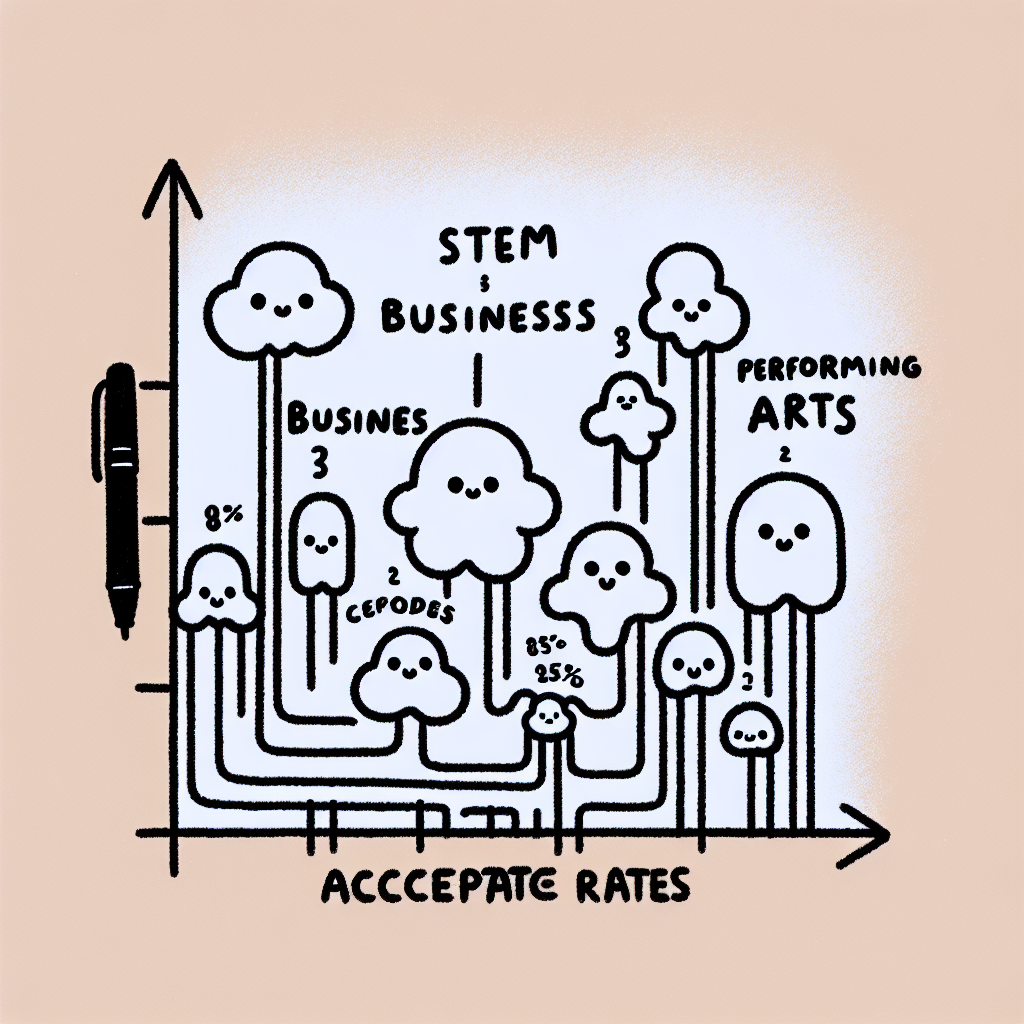
When examining average acceptance rates by major, it's clear that some fields of study are more selective than others. This variation is often driven by several factors, including faculty capacity, program funding, and student demand. Programs in STEM (Science, Technology, Engineering, and Math), business, and the performing arts tend to be more competitive. These majors often require specialized facilities, smaller class sizes, or additional resources, which can limit the number of spots available for incoming students. As a result, the acceptance rates for these programs are typically lower than those for less resource-intensive majors.
Examples of Major-Specific Selectivity
Some majors stand out for their particularly low acceptance rates:
- Engineering and Computer Science: These programs are in high demand and often have rigorous math and science prerequisites. The competitive applicant pool and limited capacity lead to lower acceptance rates compared to the university average.
- Nursing: Nursing programs are constrained by clinical placement availability and accreditation standards, which limit the number of students they can accept each year. This makes them highly selective.
- Business: Top undergraduate business programs often require a separate application process or specific prerequisite coursework. This added layer of review contributes to lower acceptance rates.
- Arts: Majors in music, theater, or visual arts typically require auditions or portfolios. These subjective and talent-based evaluations can significantly impact acceptance rates, making them more selective than general admission numbers suggest.
Internal vs. External Major Applications
Universities differ in how they handle major selection in the admissions process. Some institutions admit students directly into specific majors, which means applicants are evaluated based on the standards of that department. In these cases, applying to a competitive major can significantly reduce a student's chances of admission.
Other schools admit students to the institution as a whole, allowing them to declare their major later. However, even in this model, competitive majors often have internal application processes that students must complete after matriculation. These internal admissions can be just as selective, based on GPA, prerequisite coursework, and available space in the program. This internal competition can affect a student’s ability to pursue their intended field, even after being accepted to the college.
Understanding the role of major in college admissions is essential when interpreting average acceptance rates by major, as it reveals the nuanced and program-specific factors that influence selectivity.
Academic Preparation by Major
The Influence of AP Courses
Advanced Placement (AP) coursework plays a significant role in shaping academic preparation by major. From 2013 to 2023, AP participation among high school students rose from 31.5% to 34.7%, reflecting a national trend toward more rigorous academic preparation (College Board – Class of 2023). In the same period, the percentage of students scoring a 3 or higher on AP exams increased from 19.1% to 21.7%, suggesting not only greater participation but also improved outcomes.
For the Class of 2024, AP participation has continued to grow, reaching 35.7% (College Board – Class of 2024). This increase is particularly relevant when considering average acceptance rates by major, as competitive majors often expect applicants to have taken subject-specific AP courses. For example, students applying to engineering programs may benefit from completing AP Calculus or AP Physics, while prospective biology majors may be expected to have taken AP Biology. Such coursework demonstrates both interest and aptitude in the chosen field, which can influence admissions outcomes.
Standardized Testing Considerations
Standardized test scores also factor into academic preparation by major. SAT and ACT scores can affect admissions competitiveness, especially in majors with high applicant volume or selective criteria. According to data from the National Center for Education Statistics (NCES), higher average standardized test scores are often correlated with higher acceptance rates for certain majors, particularly in STEM fields.
However, as more institutions adopt test-optional policies, the emphasis has shifted toward other academic indicators, such as GPA and the rigor of coursework. This shift means that students must strategically plan their high school curriculum to align with the expectations of their intended major. In the context of average acceptance rates by major, rigorous academic preparation remains a critical differentiator, even as the weight of standardized testing evolves.

Understanding College Selectivity by Program
College selectivity can vary widely not only between institutions but also between individual programs or majors within the same school. Understanding how average acceptance rates by major differ is crucial for students targeting competitive fields.
Institutional Differences
Flagship public universities often exhibit wide disparities in acceptance rates by major. For example, engineering or computer science programs at these institutions may be significantly more competitive than liberal arts programs. This is due to limited capacity, resource allocation, and high demand.
Private institutions, while typically using a holistic admissions process, also manage enrollment caps in high-demand majors. Even if a university has a relatively low overall acceptance rate, the rate for majors such as business, nursing, or film production may be even lower due to space and faculty limitations.
Researching Program-Level Data
To understand average acceptance rates by major, students should seek out program-specific admissions data. This information is not always prominently displayed but can often be found through the following sources:
- Official college websites: Look for admissions or academic department pages that may provide major-specific statistics.
- Common Data Set (CDS) reports: Some institutions include selectivity or enrollment data by program in their CDS.
- Admissions blogs and departmental pages: University blogs or program-specific pages may offer insights into competitiveness and application trends.
- Direct contact with admissions offices: When data isn't publicly available, reaching out to admissions representatives can provide clarity on acceptance rates by major.
Accessing this detailed information helps students make informed decisions and better assess their chances of admission into specific programs.

Strategic Application Planning
When considering average acceptance rates by major, strategic application planning can significantly influence a student’s chances of admission. Acceptance rates often vary widely between majors, even within the same university, making it essential to approach the process with a well-informed strategy.
Choosing the Right Major Strategy
One approach involves applying directly to a competitive major, while another is to apply undeclared. Direct application to a selective program can demonstrate commitment and preparedness, but it also means contending with lower acceptance rates. For instance, majors like computer science or business often have more rigorous admission standards, leading to lower acceptance rates compared to less popular programs.
Alternatively, applying as an undeclared student might offer a higher chance of admission, but this path carries risks. Some institutions make it difficult to switch into impacted majors after enrollment due to capacity limits or additional requirements. Students should research each school’s internal transfer policies to understand the feasibility of switching majors later.
Using Data to Build a Balanced College List
Understanding average acceptance rates by major can help students build a balanced college list. A well-rounded list includes reach schools (more competitive than the student’s profile suggests), target schools (well-matched), and safety schools (likely to admit the student). However, a student’s major choice can shift a school from one category to another. For example, an institution that is a target for general admission might become a reach if applying to an especially selective program.
Beyond acceptance rates, applicants should consider institutional fit—academic offerings, campus culture, and support services—since these factors play a crucial role in long-term success and satisfaction.
Enhancing Your Application for a Specific Major
To strengthen their application, students should demonstrate interest and experience in their intended field. This can include relevant coursework, extracurricular activities, internships, or personal projects. For example, a prospective engineering major might showcase participation in robotics clubs or summer research programs.
Strong letters of recommendation that speak directly to a student’s abilities and interests in the chosen field can also make a significant impact. When possible, students should select recommenders who can highlight skills and achievements that align with their intended major, reinforcing their fit for the program.
By aligning application strategies with knowledge about average acceptance rates by major, students can make more informed decisions and improve their chances of admission into programs that best suit their goals.

Conclusion
Understanding average acceptance rates by major is essential for strategic college planning. These rates can vary significantly depending on the competitiveness and capacity of specific programs, making it critical for prospective students to research beyond general university acceptance data.
Applicants should combine national trends in average acceptance rates by major with detailed program-level insights. This dual approach allows students to realistically assess their chances and tailor their application strategies accordingly.
Using data-driven decision-making helps students target institutions and majors where they are most likely to succeed. This not only improves application outcomes but also supports long-term academic and career goals by aligning interests with realistic admissions expectations.
Citations & Resources
The following resources provide data and insights relevant to understanding average acceptance rates by major:
- NACAC - Selectivity: Acceptance Rates at 4-Year Colleges: Offers national data on trends in college selectivity, including how acceptance rates vary across institutions and majors.
- NCES - Acceptance Rates and Related Data for 2022–23: Comprehensive tables from the National Center for Education Statistics detailing acceptance rates by institution type and student demographics.
- College Board - AP Program Results: Class of 2023: Presents performance data that colleges may consider in admissions decisions, which can influence average acceptance rates by major.
- College Board - AP Program Results: Class of 2024: The latest data on AP exam outcomes, often correlated with admissions competitiveness in certain majors.
- College Board - College Rates and Requirements: A resource for understanding how admissions requirements and acceptance rates vary by college and intended field of study.

 SHARE ON FACEBOOK
 SHARE ON TWITTER