
Choosing a college isn't only about rankings, acceptance rates, or prestige. Students will spend several important years of their lives on campus, which makes the overall student experience an essential part of finding the right college.
In 2026, student satisfaction can be evaluated through factors such as academic quality, faculty accessibility, campus community, extracurricular opportunities, housing, support services, and whether students feel they belong.
There isn't one universally accepted "student satisfaction" ranking. Different organizations measure the student experience differently. For example, The Princeton Review's 2026 edition draws on surveys from more than 170,000 students across areas ranging from career services to quality of life, while Niche's 2026 student-life rankings combine student reviews with federal education data.
Understanding these factors can help families look beyond reputation and identify colleges where students have opportunities to thrive.
What Does Student Satisfaction Actually Mean?
Student satisfaction reflects how students feel about their overall college experience.
It can be influenced by:
- Academic quality
- Relationships with professors
- Campus community
- Advising and academic support
- Housing and dining
- Clubs and organizations
- Career preparation
- Social opportunities
- Campus resources
- Sense of belonging
A university can have outstanding academics while still not being the right environment for every student.
That's why satisfaction should be considered alongside academic and financial fit when building a college list.
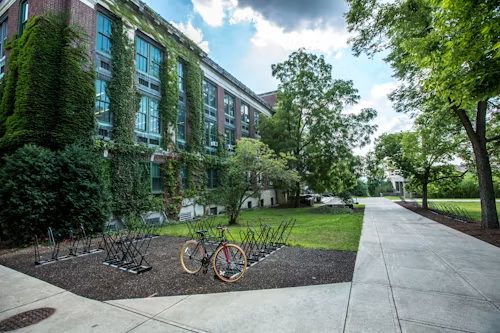
Colleges Worth Exploring for Student Satisfaction
Current student-experience rankings highlight a variety of institutions rather than one specific type of college. Niche's 2026 student-life ranking, for example, places the University of Southern California at the top of its list based on student reviews and statistics.
Other colleges frequently associated with positive student experiences include institutions such as Vanderbilt, Rice, Brown, Yale, Duke, and members of the Claremont Colleges. However, students shouldn't interpret any single list as definitive.
A large research university, small liberal arts college, and highly selective private university can each produce excellent student experiences for different reasons.
University of Southern California
The University of Southern California combines a large university environment with extensive extracurricular activities and a strong campus community.
USC currently holds the No. 1 position in Niche's 2026 ranking of colleges with the best student life.
Students looking for a large university experience may appreciate access to:
- Hundreds of student organizations
- Major athletics
- Research opportunities
- Arts and entertainment
- Professional networking
- Los Angeles internship opportunities
Vanderbilt University
Vanderbilt University offers rigorous academics alongside an active residential campus experience.
Its location in Nashville provides students with opportunities beyond campus while maintaining a distinct university community. Students considering Vanderbilt should explore its residential system, undergraduate advising, student organizations, and academic programs when determining whether the environment matches their priorities.
Rice University
Rice University is particularly notable for its residential college system.
Rather than functioning simply as dormitories, residential colleges can provide students with smaller communities within the larger university. This structure can encourage friendships, traditions, mentorship, and interaction between students from different academic backgrounds.
For applicants who value a close-knit environment but still want the resources of a research university, this type of structure may be particularly appealing.
Brown University
Brown University offers an unusually flexible undergraduate academic structure through its Open Curriculum.
Students have considerable freedom to shape their education around their interests. For students who value academic exploration and independence, curriculum flexibility can significantly influence satisfaction.
However, students who prefer highly structured academic requirements may find a different type of university more suitable.
Duke University
Duke University combines selective academics with athletics, research, student organizations, and an active campus environment.
Students interested in Duke should evaluate not only its academic reputation but also opportunities for interdisciplinary study, undergraduate research, community involvement, and campus traditions.
The Claremont Colleges
The Claremont Colleges provide an interesting model for students who want both a small-college experience and access to broader resources.
Students attend an individual institution while gaining access to resources and courses across the consortium.
The broader Claremont community has also performed strongly in student-experience research. Earlier Wall Street Journal/College Pulse student-experience rankings placed Scripps College first and had four undergraduate Claremont institutions within the top 12.
Why Smaller Communities Can Increase Satisfaction
One lesson students can take from satisfaction research is that bigger isn't automatically better.
Smaller communities may provide:
- More interaction with professors
- Smaller classes
- Stronger peer relationships
- Personalized advising
- Greater opportunities for involvement
But some students prefer large universities because they provide more courses, organizations, research facilities, athletics, and social opportunities.
Neither model is automatically superior.
Academic Satisfaction Matters Too
Campus life shouldn't overshadow academics.
Students should investigate whether they will enjoy the actual learning environment by considering:
- Average class sizes
- Faculty accessibility
- Undergraduate research
- Academic advising
- Curriculum flexibility
- Tutoring resources
- Opportunities within their intended major
Your experience within your major can be particularly important. Research on college-life satisfaction has found that satisfaction with one's chosen major can be strongly connected to overall college satisfaction.
Look at Retention and Graduation Data
Student reviews aren't the only information families should examine.
Retention rates can provide additional context. A high first-year retention rate indicates that a large percentage of students return after freshman year.
Graduation rates can also help families understand student outcomes.
Neither statistic proves students are happy, but combining outcomes data with student surveys and campus research provides a more complete picture.
Don't Ignore Academic Support
Students sometimes research dining halls and dormitories extensively while overlooking academic support.
Before applying, investigate whether a college provides:
- Tutoring
- Writing centers
- Faculty mentoring
- Academic coaching
- First-year advising
- Career counseling
These resources can become extremely important when students encounter difficult courses or need guidance about their academic direction.
Career Preparation Can Influence Satisfaction
Students also want to know that their education is preparing them for life after graduation.
Look for opportunities including:
- Internships
- Career advising
- Alumni networking
- Undergraduate research
- Co-op programs
- Employer recruiting
- Experiential learning
A satisfying college experience should ideally support both personal development and long-term goals.
How to Research Student Satisfaction Yourself
Rather than relying exclusively on a "happiest colleges" list, investigate each school from several perspectives.
The Princeton Review's 2026 rankings are particularly useful because their college lists incorporate responses from more than 170,000 students. Niche also provides student-life rankings informed by student reviews and federal statistics.
Students can also:
- Visit campuses
- Attend admitted-student events
- Speak with current students
- Explore student organizations
- Research retention rates
- Compare academic resources
- Review career outcomes
Try asking current students specific questions instead of simply asking whether they like their college.
For example: How accessible are professors? What happens when students struggle academically? Is it easy to join organizations? What do students typically do on weekends?
Specific questions usually produce more useful answers.
Find the College Where You Will Thrive
The college with the highest student satisfaction nationally may not be the college where you will be happiest.
One student might want major athletics and a large social environment. Another may prefer small seminars and a quiet residential community.
Consider your priorities across:
- Academics
- Community
- Location
- Cost
- Career opportunities
- Campus size
- Social environment
- Student support
The strongest college list reflects your definition of a successful college experience.
Final Thoughts
The best colleges with the highest student satisfaction in 2026 aren't necessarily the institutions with the highest overall rankings. Student satisfaction comes from a combination of strong academics, supportive communities, accessible resources, meaningful activities, and opportunities for personal and professional growth.
Current rankings provide useful starting points, but they shouldn't make the decision for you. The Princeton Review and Niche both rely heavily on student experiences in their 2026 college resources, making them valuable tools when researching campus life.
Ultimately, finding a college where you'll thrive means looking beyond prestige and asking a more important question: Does this school provide the environment, opportunities, and community I need to succeed?
 SHARE ON FACEBOOK
 SHARE ON TWITTER